
본문
Astrocytic GABA Dysregulation as a Novel Therapeutic Target for Post-Traumatic Stress Disorder


By prof. In Kyoon Lyoo & prof. Sujung Yoon
Divison of Brain & Cognitive Sciences
PURE Research Profile - Prof. In Kyoon Lyoo & Prof. Sujung Yoon
inkylyoo@ewha.ac.kr & sujungjyoon@ewha.ac.kr
Beyond Serotonin: A Paradigm Shift in PTSD Treatment Targeting Astrocytes
Post-traumatic stress disorder (PTSD) remains a severe and debilitating psychiatric condition, characterized by intense anxiety and distressing, recurrent flashbacks. For decades, the therapeutic landscape has been dominated by treatments targeting serotonin receptors. Unfortunately, these pharmacological options have reached a plateau, offering limited success with response rates hovering at only 20–30%. Driven by the urgent, unmet medical need for more effective strategies, our research team shifted focus away from traditional neuronal targets. We turned our attention to a promising alternative: gamma-aminobutyric acid (GABA), the brain's primary inhibitory neurotransmitter, hypothesizing that the answer lay in the brain's inhibition mechanism rather than excitation.
Human Brain Imaging Reveals Elevated GABA in PTSD
To validate this potential target in a clinical setting, we conducted large-scale neuroimaging studies which revealed that PTSD patients exhibit significantly elevated GABA concentrations in the prefrontal cortex, correlating with reduced cerebral blood flow and symptom severity. Critically, our longitudinal assessment demonstrated that GABA levels normalized in parallel with natural symptom recovery over 8 months. This establishes GABA dysregulation as an active, modifiable driver rather than a mere consequence of the disorder, effectively identifying it as an actionable therapeutic target for new drug development.
Identifying the Source of Excess GABA: The Role of Reactive Astrocytes
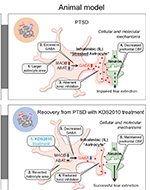
To identify the source of excess GABA, we analyzed postmortem brain tissue from PTSD patients, identifying reactive astrocytes as the primary producers. These cells exhibited a critical enzymatic imbalance—increased monoamine oxidase B (MAOB) driving synthesis—which creates an "inhibitory overload" in the brain. This mechanism was rigorously validated in PTSD-like mouse models, which not only recapitulated the human findings but also provided definitive proof of causality. Genetic experiments demonstrated that astrocyte-specific MAOB inhibition restored fear extinction, confirming that this pathway is a direct driver of PTSD pathology rather than a mere byproduct.
From Discovery to Therapy: The Promise of KDS2010
We further validated the efficacy of a new drug candidate, 'KDS2010,' which controls excessive GABA production in astrocytes. In our animal model experiments, this compound selectively inhibited the MAOB enzyme, thereby normalizing GABA levels, improving cerebral blood flow, and successfully mitigating PTSD symptoms. Having successfully completed a Phase 1 clinical trial confirming its safety, KDS2010 is now being prepared for a Phase 2 trial. This progress stands as a leading example of how a therapeutic strategy targeting astrocytes can lead to a tangible, first-in-class PTSD treatment.
A Model of Innovation: The Power of Reverse Translational Research
This research is highly regarded for its innovative "reverse translational" approach. We began with clinical observations in actual PTSD patients, traced the biological source through postmortem tissue analysis, validated the mechanisms in animal models, and finally developed a targeted therapeutic intervention. By organically integrating human clinical studies, molecular pathology, and preclinical pharmacology, we presents a personalized medicine paradigm applicable to real-world patients—moving seamlessly from bedside to bench and back to bedside.
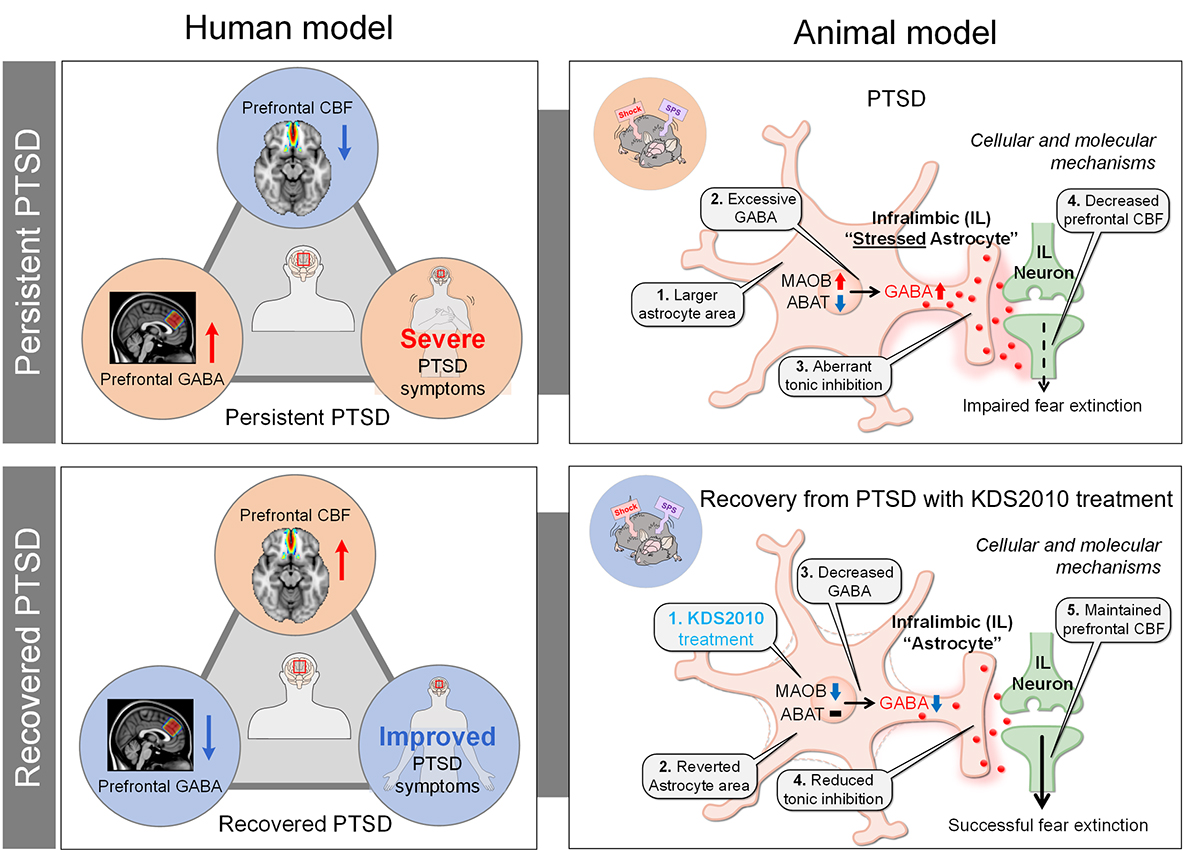
Figure 1. Schematic overview of the study results demonstrating the mechanism of prefrontal GABA regulation as a therapeutic target for PTSD
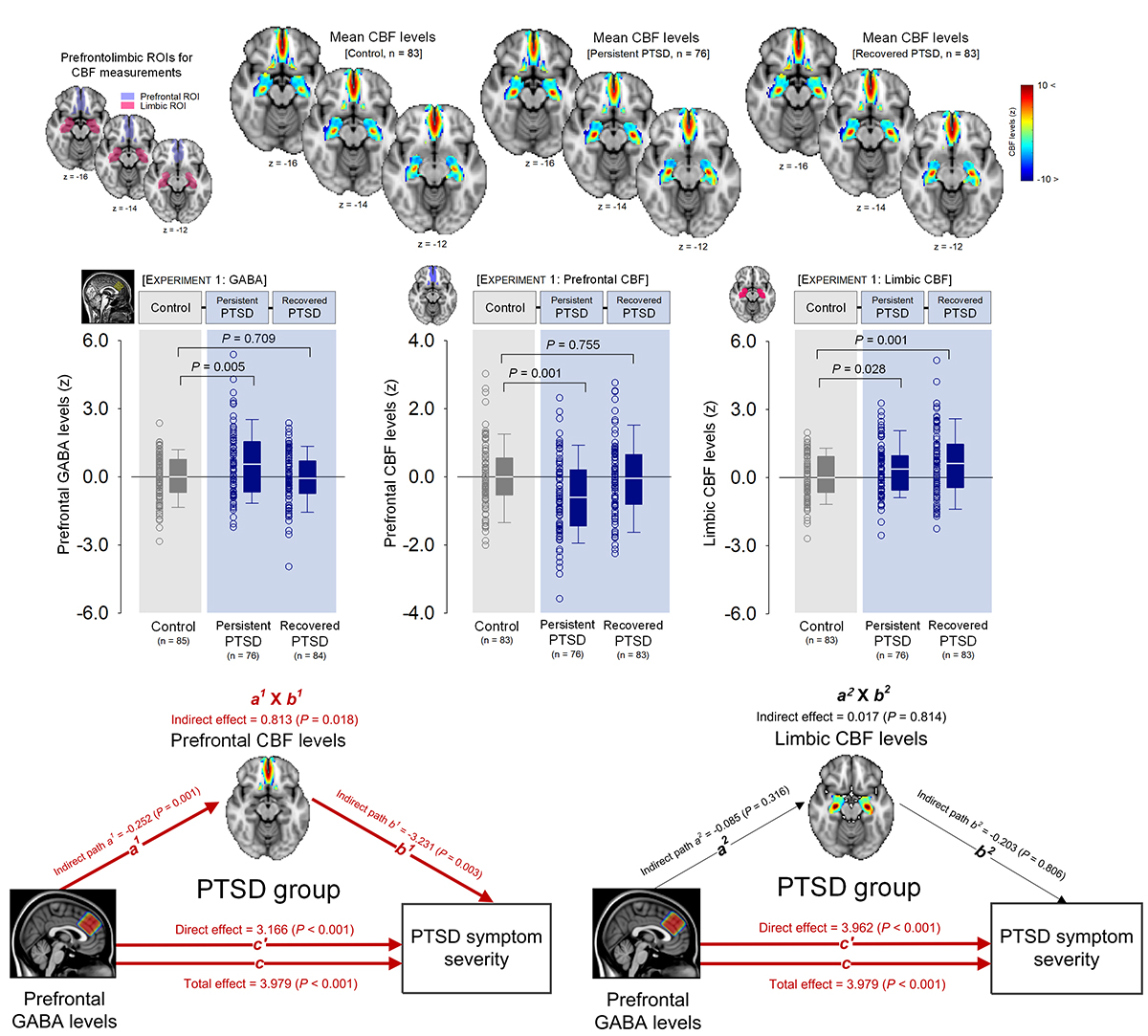
Figure 2. PTSD-related prefrontal GABA alteration, cerebral blood flow, and symptom severity
* Related Article
Sujung Yoon, Woojin Won, Suji Lee, Kayoung Han, Eunji Ha, Juheon Lee, Seung Jae Hyeon, Yoonji Joo, Haejin Hong, Hyangwon Lee, Yumi Song, Ki Duk Park, Bertrand R. Huber, Junghee Lee, Richard A. E. Edden, Minah Suh, Hoon Ryu, C. Justin Lee, In Kyoon Lyoo, Astrocytic GABA Dysregulation as a Novel Therapeutic Target for Post-Traumatic Stress Disorder, Signal Transduction and Targeted Therapy, 10, 240, 2025.

